Heart attack warning signs you should never ignoreVienaMed
myocardial infarction: signs that you should not ignore
The myocardial infarction is one of the most serious medical emergencies. It occurs when the blood flow to one side of the heart is severely blocked or reduced, and the heart muscle is no longer receiving enough oxygen.
Many people think that heart attack always starts with a violent pain in the chest. In reality, symptoms can be different from one person to another. Sometimes they are intense and clear. Sometimes they are more subtle and can be confused with fatigue, stress, anxiety or digestive problems.
That is why the recognition of alarm signs is essential.
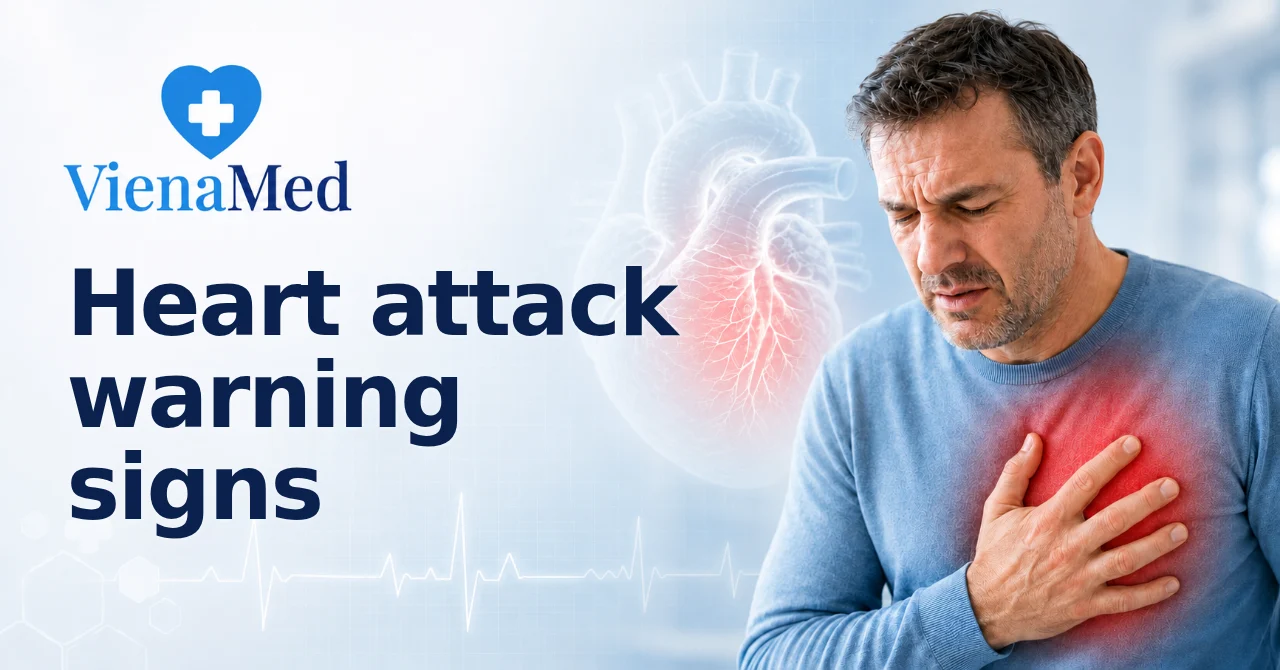
What are the signs of a heart attack?
The most common signs that may indicate a myocardial infarction include:
- pressure, pressure, tightening or chest pain;
- discomfort that lasts for several minutes or occurs and disappears;
- pain that can irradiate to the arm, shoulder, back, neck, jaw or stomach;
- lack of air;
- cold sweat;
- nausea or vomiting;
- dizziness;
- sudden weakness;
- unusual fatigue;
- general feeling of sickness or intense fear.
It is important to know that symptoms are not the same in all patients. In some people, especially in women, older people or patients with diabetes, the heart attack may have less typical manifestations such as increased fatigue, nausea, back pain or shortness of breath without severe chest pain.
When should you call 112?
Call right away. 112 if it occurs suddenly:
- pain or high pressure in the chest;
- severe lack of air;
- pain that goes to the arm, neck, jaw or back;
- cold sweat;
- intense nausea;
- dizziness or fainting;
- sudden weakness.
In the event of a heart attack, every minute counts. Don’t wait for it to pass by itself and don’t drive yourself to the hospital. Call emergency services.
Why does the heart attack occur?
The heart attack is often related to damage to the coronary arteries, the vessels that feed the heart with blood. Over time, they can be narrowed by fatty deposits, cholesterol and other substances. If blood flow is blocked, part of the heart muscle may suffer.
Risk factors may include:
- high blood pressure;
- high cholesterol;
- diabetes or high blood sugar;
- smoking;
- obesity;
- Sedentarism;
- chronic stress;
- unbalanced food;
- family history of cardiovascular disease;
- older age;
- vascular diseases already existing.
Many of these factors can be discovered before an emergency occurs. Therefore, cardiovascular prevention has a major role to play.
What can include a cardiovascular checkup?
A cardiovascular checkup aims to identify risk factors and possible heart problems at an early stage.
Depending on the doctor’s recommendation, the evaluation may include:
- cardiologic consultation;
- discussion about the medical and family history;
- assessment of lifestyle and risk factors;
- blood and urine tests;
- blood pressure measurement;
- electrocardiogram;
- cardiac ultrasound;
- effort test;
- Holter ECG or Holter tensioner monitoring, if necessary;
- weight, glucose and lipid assessment;
- personalised medical advice.
The aim is not only to detect a problem, but also to prevent complications. If risks are identified on time, the doctor may recommend treatment, monitoring, lifestyle changes or additional investigations.
How can VienaMed help you?
VienaMed supports patients in Romania who want access to specialists and clinics in Vienna for cardiology, cardiovascular checkup, prevention and second opinion.
Through VienaMed, you can receive support for:
- the choice of the right doctor or clinic;
- the appointment of consultations;
- the organisation of investigations;
- the transmission of medical documents;
- medical translations;
- communication with medical units in Vienna;
- obtaining a second medical opinion.
For patients with risk factors, unclear symptoms or family history of cardiac disease, a preventive evaluation can bring clarity and help to make the right medical decisions.
For planned controls and prevention, see guide on cardiology and investigations in Vienna.
Don't wait for the emergency
Heart attack may occur suddenly, but cardiovascular risks may exist long before. High blood pressure, high cholesterol, diabetes, smoking or family history are signals worth assessing.
Prevention is not fear. It means control, clarity and action on time.
Important: This article is intended for information and does not replace the medical consult. If you have acute symptoms of heart attack, call immediately 112.