
The role of fats in the bodyVienaMed
Fats and vitamins: what does your body need?
Fats have long been regarded as an element of the diet that should be reduced as much as possible. In reality, the body needs fat to function normally. They provide energy, enter the structure of cell membranes, participate in the production of hormones and contribute to the absorption of certain vitamins.
The difference does, however. type of fat that we consume and quantity.
A balanced diet does not mean fat removal, but the predominant choice of quality sources and the limitation of those who, consumed in excess, may increase cardiovascular risk.
Why does the body need fat?
Fats are one of the main macronutrients, together with carbohydrates and proteins. In addition to their energy role, they are involved in numerous important processes.
Fat helps the body absorb liposoluble vitamins A, D, E and K. These vitamins need the presence of fats in the digestive tract to be absorbed and used efficiently.
Some fats also provide essential fatty acids that the body cannot produce on its own and that we need to obtain by eating.
Vitamins A, D, E and K need fat
The four liposoluble vitamins have different but very important functions.
Vitamin A helps maintain normal vision, function of the immune system and skin health.
Vitamin D is important for the absorption of calcium, bone health and normal functioning of the muscle and immune system.
Vitamin E has an antioxidant role and helps to protect cells against oxidative stress.
Vitamin K participate in the normal blood clotting process and play an important role in bone health.
For this reason, an extremely low fat diet is not always a good choice. More important is the quality of the fats consumed.
Unsaturated fats - preferred choice
In general, unsaturated fats are considered a more suitable option for daily food when replacing some of the saturated fats.
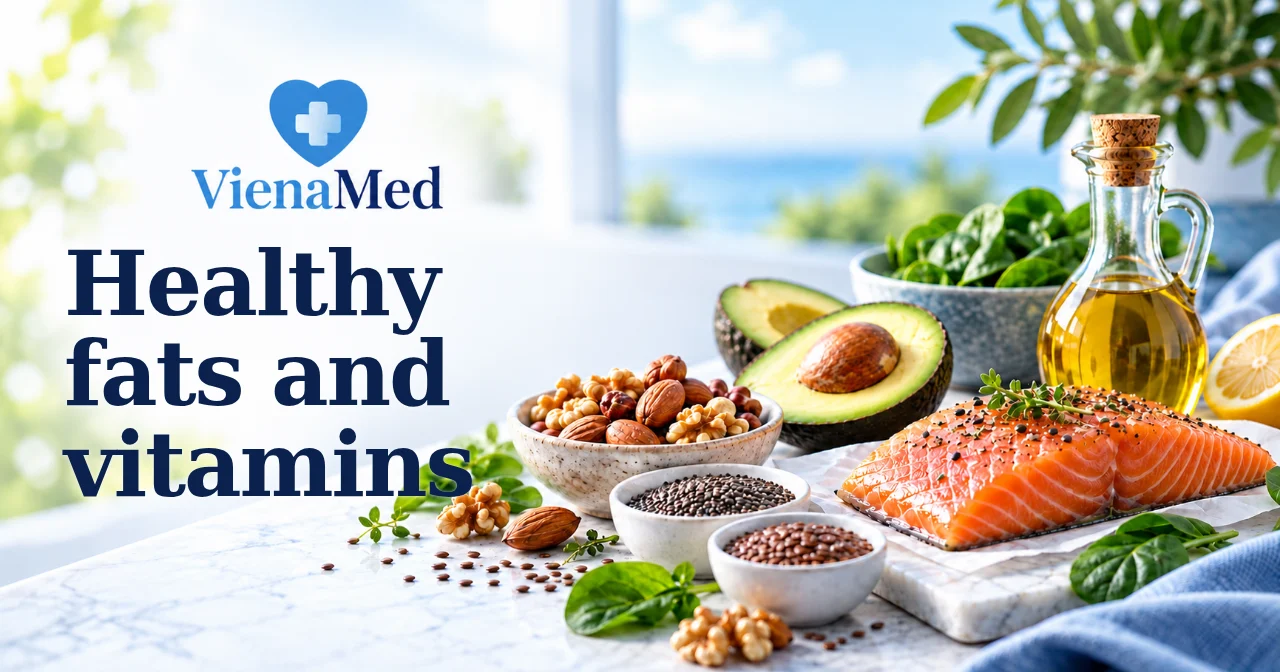
We find them in food like olive oil, rape oil, avocados, walnuts, almonds, seeds and fatty fish.
These foods can be part of a balanced food model and can help maintain cardiovascular health.
Vegetable oils should not, however, be regarded as „limitless’ foods. Even if they come from beneficial sources, all fats have a high calorific density and the amount consumed remains important.
Why are Omega-3 fatty acids important?
Omega- 3 fatty acids are a type of polyunsaturated fat that is important in the body.
Fat fish, such as salmon, mackerel, sardines or herring, are important sources of Omega- 3. Vegetable sources are flax seeds, chia seeds and walnuts.
A meal that regularly includes such foods can contribute to a balanced intake of essential fatty acids.
What about animal fat?
No complete disposal of food of animal origin is necessary. However, it is recommended that very high saturated fat products be moderated.
Very fat meat, butter, cream, some cheeses and processed meat products may contain significant amounts of saturated fat.
The problem arises in particular when they represent too much of the daily diet and replace unsaturated fat sources.
A simple principle is to choose more often fat from fish, nuts, seeds, avocados and quality vegetable oils, keeping foods rich in saturated fat for moderate consumption.
What do we need to know about trans fats?
Trans fat is considered the least favourable to cardiovascular health and should be consumed as rarely as possible.
They may occur in certain ultra-manufactured products, pastry products, snacks, fried products or foods made with partially hydrogenated fats.
Reading food labels can help identify products with a better nutritional profile.
Not only the type of food matters, but also the way it is prepared
A healthy food can become less suitable if it is prepared with very large amounts of fat or by repeated frying.
For daily food methods such as cooking, boiling, steam preparation or quick cooking with a moderate amount of oil are preferable.
In the case of oils, it is important to use them according to their destination and to avoid repeated overheating.
How can we include healthy fats in the diet?
There is no need for complicated changes. A few simple choices can improve the quality of dietary fats:
- uses olive oil or other suitable vegetable oils instead of large amounts of animal fat;
- periodically include fat fish in the diet;
- add nuts or seeds to yogurt, salads or breakfast preparations;
- consume avocado as part of a balanced meal;
- limit ultra-manufactured products and foods very rich in saturated or trans fat.
The general context of food is always important. No food can compensate for an unbalanced diet alone.
Balance is more important than eliminating
In nutrition, extremes are rarely the best solution.
Fats must not be removed, and the foods containing them must not be automatically considered unhealthy. The body needs them for both energy and absorption of vitamins A, D, E and K and for numerous other physiological processes.
The difference is the choice of the right sources and their integration into a varied diet.
If there are cardiovascular diseases, diabetes, lipid metabolism disorders, liver problems or other medical problems, food recommendations should be adapted individually.
Prevention begins with daily elections
Food is just one of the components of a healthy lifestyle. Physical activity, sleep, periodic medical checks and early identification of risk factors are equally important.
VienaMed support patients seeking access to evaluations and medical services in Vienna, as well as investigations, expert consultations and second opinion.
For the subject of cardiovascular prevention, see also the article on Cardiological consultations and investigations.